Complainer
Intelligent issue routing from the browser, powered by AI.
Complainer is a Chromium extension that lets teams submit issues directly from their web browser. Each submission captures a screenshot and navigation history leading up to the event, giving downstream systems rich context about what happened and where.
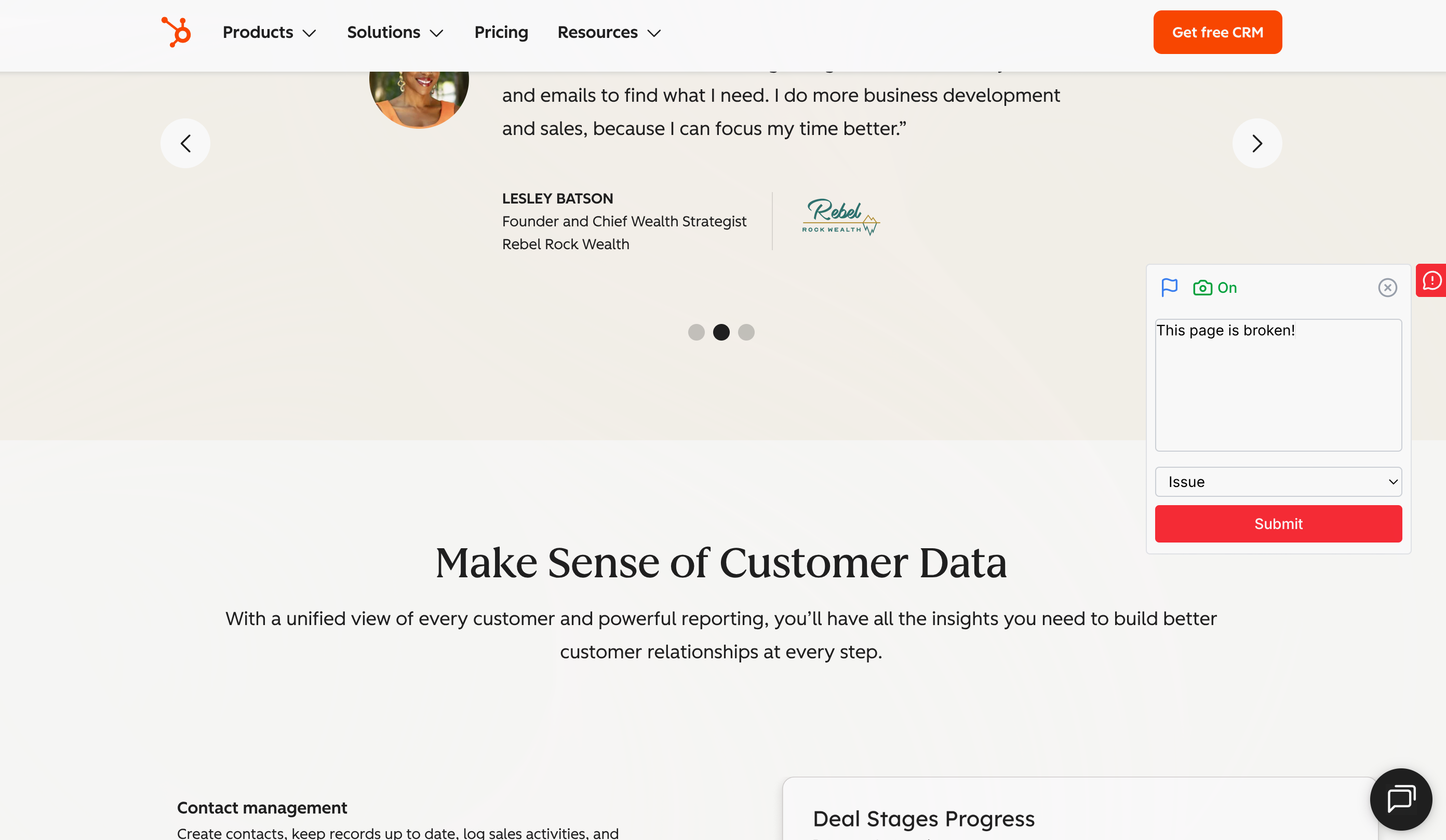
Intelligent Routing
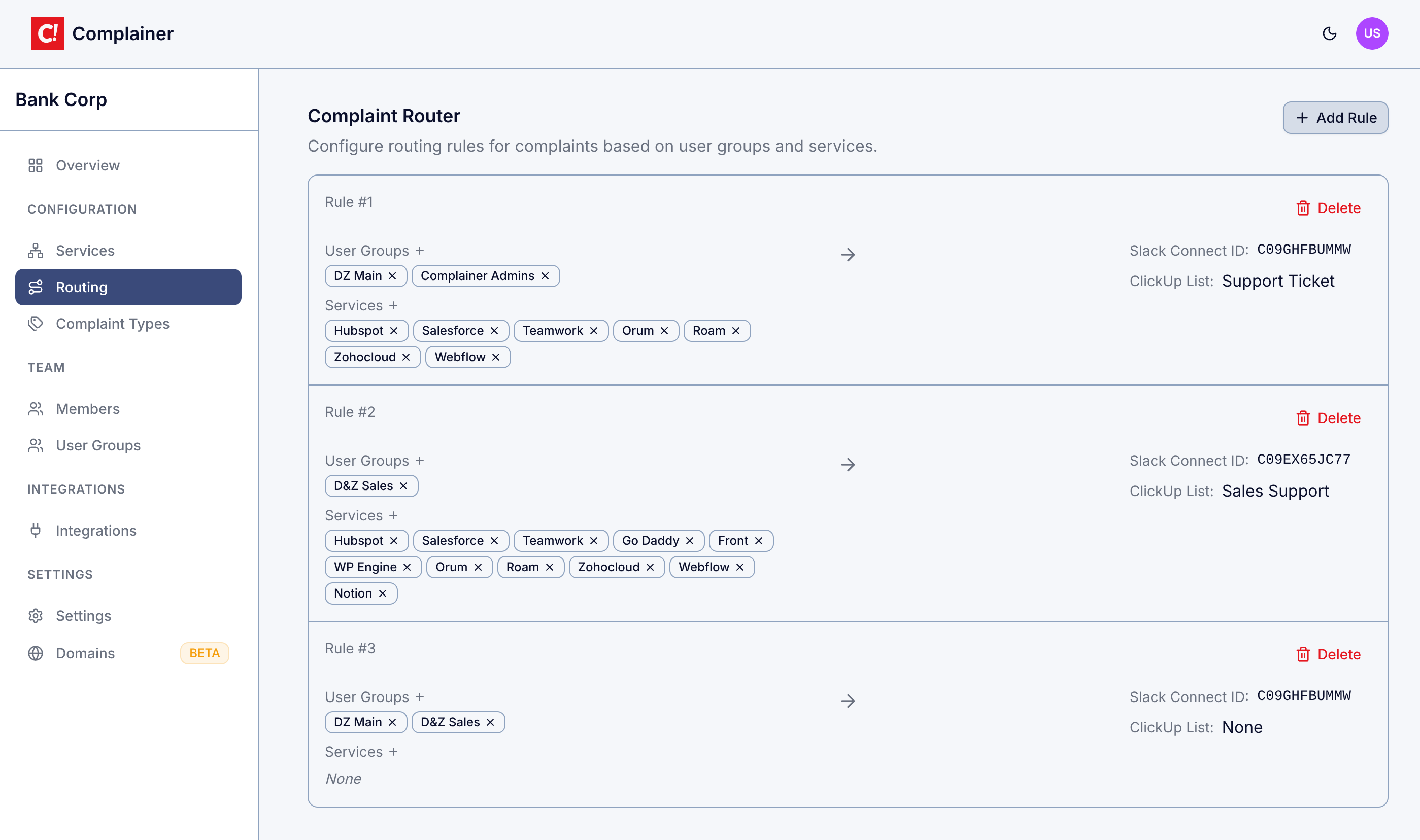
Complaints are intelligently routed to Slack channels, ticketing systems, or AI based on who submitted it, what service it involves, and when it was filed. Routing rules are configured through an admin dashboard, mapping user groups and services to the right destination.
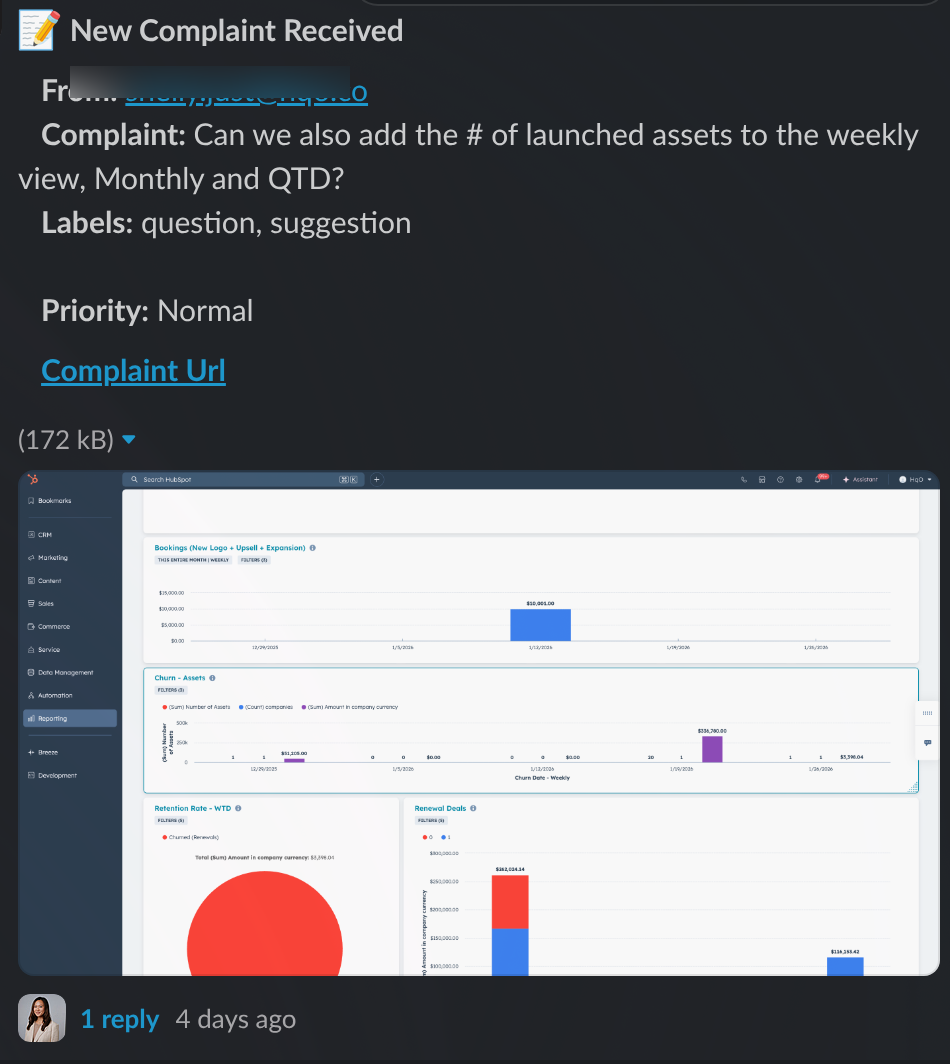
AI-Powered Resolution
We observed that ChatGPT struggled to help solve internal support requests based on standard text forms, but with a screenshot attached the auto-solve rate shot up to 72%. For the remaining cases, ChatGPT was still able to prime the operator with rich context and drastically reduced human operation time per ticket.
With all requests logged with rich metadata, follow-up analysis was able to guide follow-on IT investment to systematically eliminate the largest sources of issues.
Technical Details
Daswolf designed, built, and shipped the working system in one week. The backend runs Python with FastAPI and Pydantic AI, backed by SQLite and instrumented with Logfire. The frontend is a Svelte admin dashboard paired with a Chrome extension. The entire stack runs on a $5/month DigitalOcean droplet, deployed with Terraform, Tailscale, and GitHub Actions, installed and running for a team of 30 users.
← Back to case studies